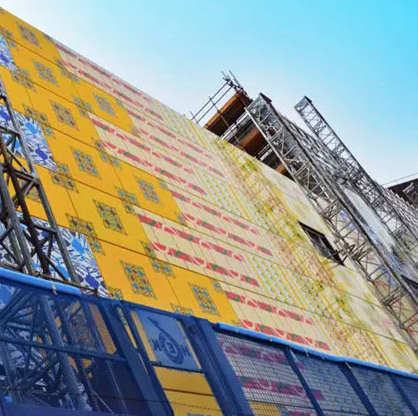
Digital printing on metal is experiencing a powerful surge, driven by the demand for sharper graphics, shorter production cycles, and greater design freedom across industries ranging from packaging to decorative panels.
As manufacturers shift away from traditional coating systems, they increasingly seek surface treatments that ensure ink adhesion, long‑term durability, and environmental compliance.
This evolving landscape opens the door for next‑generation functional coatings—particularly sol‑gel systems, which offer an exceptional bridge between high‑performance surface chemistry and the needs of digital ink technology. EXOCOAT™ has recently developed Sol‑gel coatings that stand out because they create inorganic–organic hybrid networks that chemically bond to metal substrates. These systems form durable ceramic‑like films capable of resisting weathering, abrasion, and chemical exposure. In digital printing, this provides a decisive advantage: inks anchor more strongly, colour density increases, and the print remains stable under UV, humidity, or thermal stress.
Compared with conventional polymer coatings, sol‑gels avoid microplastic release and support long‑term surface stability—an important advantage described in your sustainability‑oriented EXOCOAT™ material.
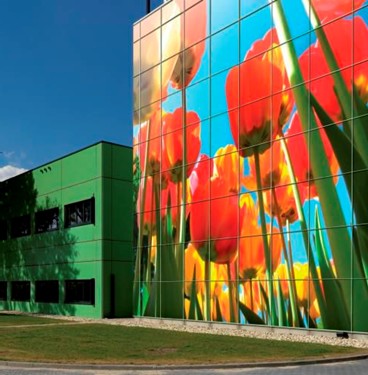
As digital printing expands into metals such as aluminium, stainless steel, and galvanized steel, the need for versatile pretreatment grows. EXOCOAT™’s hybrid sol‑gel expertise—already proven in metal pretreatment and functional protective layers—makes it uniquely positioned to respond.
Axcentive’s decision to enter the digital‑metal‑print arena with EXOCOAT™ solutions stems from three strategic factors.
First, the market’s rapid growth and technical demands align perfectly with EXOCOAT™’s core competencies in sol‑gel and hybrid coatings. Second, customers seek alternatives to traditional pretreatments, especially fluorinated or heavy‑metal‑based systems—an area where EXOCOAT™’s chemistry already proves itself across multiple industries. Third, the company occupies a unique position: a sol‑gel specialist with both formulation know‑how and scalable product offerings, capable of supporting end‑users, OEMs, and ink suppliers with tailor‑made surfaces.
This combination of technical depth, sustainability, and application flexibility gives Axcentive and EXOCOAT™ a distinctive competitive advantage. As digital printing on metal accelerates, EXOCOAT™ stands ready to deliver engineered sol‑gel surfaces that elevate print quality, enhance durability, and meet the rising demand for environmentally conscious solution
The Competitive Edge of EXOCOAT™ Sol-Gel vs. Traditional Resins
In the digital printing surge, sol-gel is outperforming standard resins in four critical areas:
- Covalent Bonding (Adhesion) : Unlike standard resins that “sit” on top of the metal (mechanical adhesion), sol-gel undergoes a chemical reaction that creates covalent bonds with the metal oxide layer. It effectively becomes part of the substrate, making it nearly impossible to peel or flake.
- Thermal Stability : Traditional resins start to degrade or yellow around 150°C–200°C. Sol-gel inks can withstand 400°C to 600°C, making them the only viable digital option for engine components, cooktops, and industrial heat shields.
- Extreme Thinness : Sol-gel can be printed in layers as thin as 200nm to 10µm. This is much thinner than standard digital inks, allowing for “invisible” protective coatings that don’t change the tactile feel of the metal.
- Hardness & Scratch Resistance : Because sol-gel creates a glass-like silica (SiO2) or titania (TiO2) network, it offers a Pencil Hardness (9H+) that organic resins simply cannot match.